What Makes Eger Wine Eger Wine? A Wine Region Guide for Weekend Travellers
In Eger, wine is not just another activity. It is not something you simply tick off after visiting the castle, Dobó Square and having dinner before moving on. Instead, it is present almost everywhere. On terraces, on menus, in the cool cellars, in the second glass beside dinner, and in the slower rhythm the city reveals when you do not rush through it.
But what makes a wine truly Eger wine? Is it the fact that it was made around Eger? Is it because the label says Bikavér? Or is it because, after one glass, you somehow taste the freshness of the cooler hills, the warmth of sunny vineyards and the old Eger tradition in which winemakers often think not in single grape varieties, but in blends?
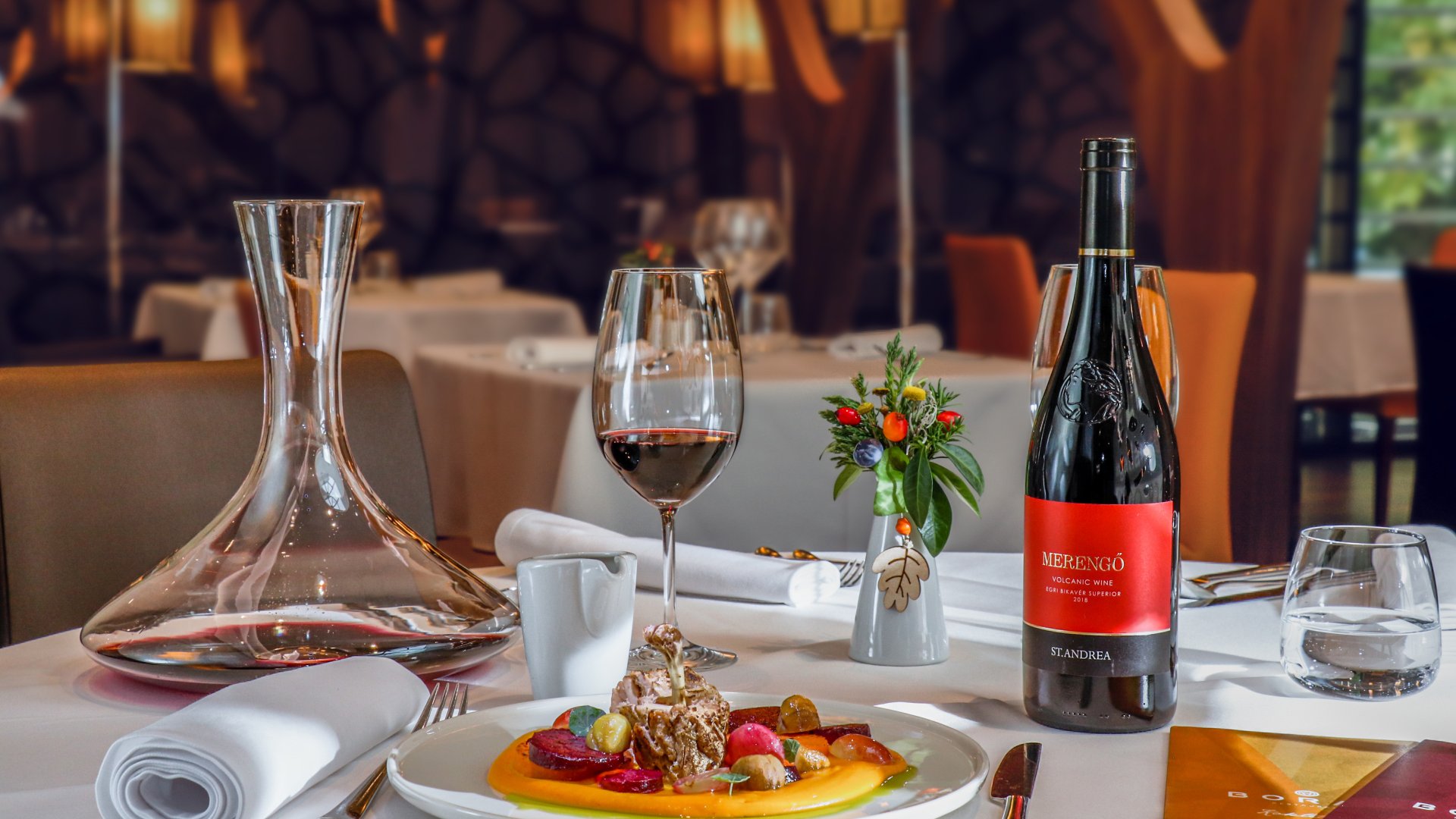
The answer is somewhere between all of these. Eger wine is not one single flavour, but a regional character. It carries the cool influence of the Bükk Mountains, tuff-rich soils, a wide range of grape varieties, traditions matured in cellars, and of course two names you have probably heard even if you are not a wine enthusiast: Egri Bikavér and Egri Csillag.
This short guide is not written for wine experts, but for weekend travellers. For those who would like to sit down to a dinner or wine tasting in Eger with a better understanding of what is in their glass, without feeling that every sip needs to become a professional tasting note.
Why is a wine not Eger wine just because of the label?
A wine does not become Eger wine simply because the label says so. Behind the Eger character there is a wine region, a set of regulations, a winemaking approach and the experience of many generations.
The Eger wine region is located in Northern Hungary, around the city of Eger, between the Mátra and Bükk Mountains, where the Northern Hungarian Mountains meet the Great Hungarian Plain. The official product specification of Egri Csillag also states that Eger lies 160 to 180 metres above sea level, while the Eger valley is bordered to the east and west by hills rising 200 to 300 metres high. This is not just a dry geographical detail, but an important background to the wines as well.
As a weekend traveller arriving in Eger, you do not need to analyse this with a map in hand. It is enough to remember that the city and the surrounding vineyards are located in a place where cooler mountain influences and warmer lowland effects meet. This duality appears in many Eger wines: they can be fresh, lively and marked by good acidity, while still having substance.
This is what makes a glass of Egri Csillag or Egri Bikavér exciting. You are not simply drinking a white or red wine, but tasting a region where cooler nights, sunny slopes, the soil and the winemaker’s decisions all shape the final result. In a good Eger wine, the most interesting question is often not the exact percentage of each grape variety, but how well the wine can express this Eger balance.
Why does the proximity of the Bükk Mountains matter so much?
The proximity of the Bükk Mountains is important because it can bring a cooler influence to the wine region, especially at night. This may help preserve the freshness, acidity and fruit character of the grapes.
In wine, acidity does not mean something unpleasantly sour. It gives structure. It is a little like rhythm in a well-written sentence: without it, everything feels flatter. In a fresh white wine, acidity is what makes you feel like taking another sip. In a red wine, it can help prevent the wine from becoming heavy, tiring or sluggish.
According to the Egri Csillag product specification, compared with wines produced in wine regions south of Eger, Egri Csillag wines may be richer in natural acidity and are often characterised by a rich aromatic profile and minerality. For a weekend traveller, this is good news, because Eger whites are often not only light, but also energetic.
You can imagine the Bükk Mountains as placing a slightly cooler hand on the shoulder of the wine region. The sunshine ripens the grapes, while the cooler influences may help the wine remain not only ripe, but fresh and lively as well. This is one of the reasons why Eger can be suitable for both exciting white wines and serious red wines.
What makes the soils of Eger so interesting?
The soils of Eger are interesting because they are not just a background element, but a factor that helps shape character. In the region, tuff-rich soils and volcanic-origin rocks are often mentioned, and these can contribute to the tighter, more mineral impression of Eger wines.
Minerality, of course, does not mean that the wine tastes like stone. It is more of a sensation. A cleaner, drier, cooler, more elegant layer behind the fruitiness. If in a wine you do not only notice apple, citrus, cherry or spice, but also a firmer, more restrained structure, you may be sensing one trace of the local terroir.
This matters in Eger because the city’s wine identity is not only about the big names. It is not only about Bikavér or Csillag. It is also about the diversity of vineyards, slopes, cellars and soils, which leads to different winemaking interpretations. The same wine region can produce lighter, fruitier wines as well as more serious, contemplative bottles.
You do not need to understand all of this in depth during one weekend. But it is useful to know that when you drink Eger wine, you are not looking for one single, formulaic style. Instead, pay attention to which face of Eger the wine is showing in your glass.
Why is blending so important in Eger?
One of the most important wine-related keywords in Eger is blending. At first, this may sound like a technical term, but it is actually about something very human: how several different characters can be brought together into one harmonious whole.
Neither Egri Bikavér nor Egri Csillag is made from a single grape variety. Both are blends. This means that wines from several grape varieties come together, each contributing something to the final result. One may bring freshness, another body, a third fruitiness, while another may add spice or structure.
The winemaker’s role is a little like that of a good chef. It is not important for each ingredient to be loud on its own, but for them to work together. If there is too much of one element, the whole thing becomes unbalanced. If they meet well, the wine does not feel like a collection of parts, but as a unified experience.
The official product specification of Egri Bikavér also highlights that blending is an old and important winemaking practice in Eger, which can help balance vintage variation and create a distinctive wine character.
This is why two Egri Bikavér wines or two Egri Csillag wines can differ from each other, while still sharing a certain Eger way of thinking. No single grape variety wants to be the only main character. Instead, the atmosphere of the wine region comes together in the glass.
Why is Egri Csillag a good starting point?
For many people, Egri Csillag is the best first step into the wines of Eger. It can offer a fresher, brighter and more approachable wine experience, which makes it a good choice at the beginning of a weekend trip.
Imagine arriving in Eger. You put down your bag, take a walk through the city centre, you are not yet in the mood for a heavy dinner, just something light to eat, and you would like a glass of local wine to go with it. This is exactly the kind of moment when Egri Csillag can be a good choice. It does not demand too much attention, but if you do pay attention, there is plenty to discover.
It may show citrus freshness, white-fleshed fruit, floral aromas, lively acidity and the clean, energetic character that makes it pleasant even after a long day. You do not need to be a wine expert. It is enough to taste it and decide whether you would like another glass.
According to the official Egri Csillag product specification, depending on the classification level, the wine can be light yet long in flavour, or it can also be a fuller, richer white wine. This means you should not think of it as one single style. There are fresher, simpler everyday versions, but also more serious and more complex expressions.
For an Eger weekend, Egri Csillag is like a good opening sentence. It introduces you to the city, but does not try to tell you everything at once.
Why is Egri Bikavér more than the old legend?
For many people, the name Egri Bikavér still brings to mind an old image of a big, heavy red wine. Yet today’s Bikavér is a much more interesting story than that.
Bikavér is Eger’s best-known wine, but it is not exciting simply because of its powerful name. It is exciting because it carries the essence of Eger’s blending culture. Several red grape varieties meet in it, and a good Bikavér is not merely strong or full-bodied, but balanced. It can have fruit, spice, structure, acidity and sometimes depth from oak ageing, but at its best, it does not try to be too much.
The official website of the Eger wine region also describes Egri Bikavér as the defining wine type of the region, with a long historical tradition. According to the Collection of Hungarikums, Egri Bikavér became the first protected-origin wine of modern Hungarian wine history based on the 1997 Egri Bikavér Regulation.
During a weekend in Eger, Bikavér is more of an evening wine. It is not necessarily what you choose for a quick lunch, but rather for a moment when you are no longer in a hurry. With a more substantial dinner, a longer conversation, a cooler evening or a situation where it feels good for the wine to set a slower pace.
The old legend, then, is only the gateway. The real interest of modern Bikavér lies in how many shades it has. It can be elegant, fruity, spicy, deep, serious or surprisingly drinkable. If you only have an old memory of it, Eger is a good place to taste it again.
How should you taste Eger wine if you do not want to seem like an expert?
The best method is not to try to seem like an expert. Wine is not an exam, and in Eger it would be a shame to drink as if you had to prove something with every sip.
A few simple questions are enough. What does it smell like? Is it light or full-bodied? Does it refresh you or draw you into a deeper mood? What kind of food could you imagine with it? Do you want to take another sip?
With Egri Csillag, you can pay attention to freshness, fruitiness and lightness. With Egri Bikavér, look for spice, red fruits, structure and balance. You do not need to say words like tannin structure or minerality. If you feel that something is lively, round, deep or elegant, you are already close enough.
It also helps not to judge the wine completely on its own. A wine can show a very different side on a terrace in the afternoon than it does during dinner. It will feel different beside a light salad than beside a richer meat dish. That is why, for a weekend traveller, the best question is often not how objectively good the wine is, but whether it works well in that particular moment.
And one more thing: it is perfectly fine to ask questions. In a good place, nobody looks down on someone who does not know everything. In fact, the simplest questions often lead to the best conversations. Which one is fresher? Which one goes better with dinner? Which one shows the character of Eger more clearly? These are all very good questions.
Which wine should you choose for different moments of the weekend?
You do not need to choose just one wine for a weekend in Eger. It is better to think in situations. A different wine suits your arrival, a long dinner or that moment when all you want to do is talk.
After arriving, when you are still easing into the city, a fresh Egri Csillag can work well. It is not heavy, not too serious, but local. It can also be a good choice with a lighter lunch or on a terrace in the afternoon. If the weather is warm or you have been walking a lot, a lively white wine is often a better start than a serious red.
At dinner, it is worth matching the wine to the food. With lighter dishes, fish, poultry, salads or vegetable-based plates, Egri Csillag will often be the more obvious choice. For richer, meatier or spicier dishes, Egri Bikavér can provide a better frame.
The best wine choice is often not the most expensive or the most famous bottle. It is the one that suits the moment. And in Eger, there are plenty of moments where wine naturally belongs: after a walk, during dinner, at the end of a quieter evening or before a slow restart the next morning.
Why is an Eger weekend better if you understand a little about wine?
Not because you can order more cleverly. But because wine suddenly becomes not just a drink, but part of the place.
It feels different to drink an Egri Csillag when you know why its freshness matters. You look at Bikavér differently when you understand that it is not one single grape variety, but the meeting of several characters. And you sit down to dinner differently when you do not simply order what sounds familiar, but what fits the moment.
Here, knowledge does not take away from the experience; it adds to it. You do not need to act like an encyclopedia. You do not need to know every vineyard. But if you broadly understand why blending matters in Eger, what the Bükk Mountains can contribute, and why Csillag and Bikavér play different roles, you will notice more in the glass.
In Eger, wine works best when you do not treat it as a separate programme. A glass of white in the afternoon, a more substantial red with dinner, a slow walk afterwards, and then a comfortable hotel where you do not need to rush anywhere. In moments like this, the wine region is not an explanation, but an experience.
Why should you not squeeze everything into one wine tasting?
During a weekend in Eger, it is easy to overplan the wine programme. A cellar, a tasting, dinner, another cellar, one more glass, one more wine. In the end, the very thing you set out for can disappear: calm.
Discovering a wine region is not a competition. A weekend is not good because of how many wines you tasted, but because you have memories of them. A conversation with a winemaker, a good dinner, an unexpectedly well-chosen glass of Egri Csillag, or a Bikavér that changes your old assumptions. These are worth much more than an overcrowded schedule.
It is better to think of wine as just one layer. In Eger, there is also the city, the historic centre, the baths, the restaurants, the walks and the rest. When all of this comes together, wine is not a separate attraction, but the natural flavour of the weekend.
How does all this connect to a relaxed stay in Eger?
A wine-focused Eger weekend is best when it has time to unfold. You do not need to squeeze five wineries into one day, and you do not need to write notes about every glass. Often, a good dinner, a thoughtfully chosen wine, an afternoon spent bathing or relaxing in the spa, and the feeling that you are finally not in a hurry are enough.
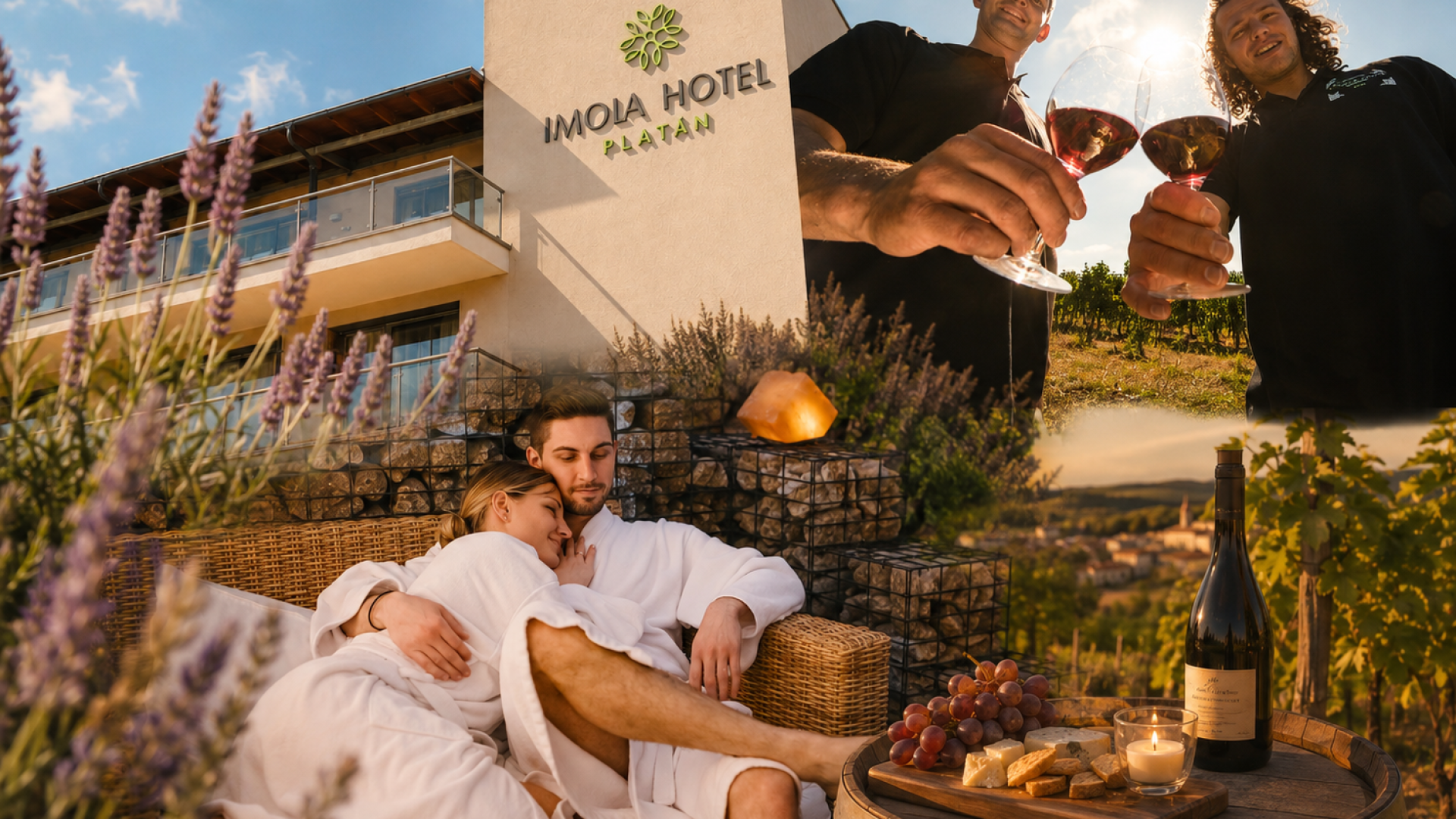
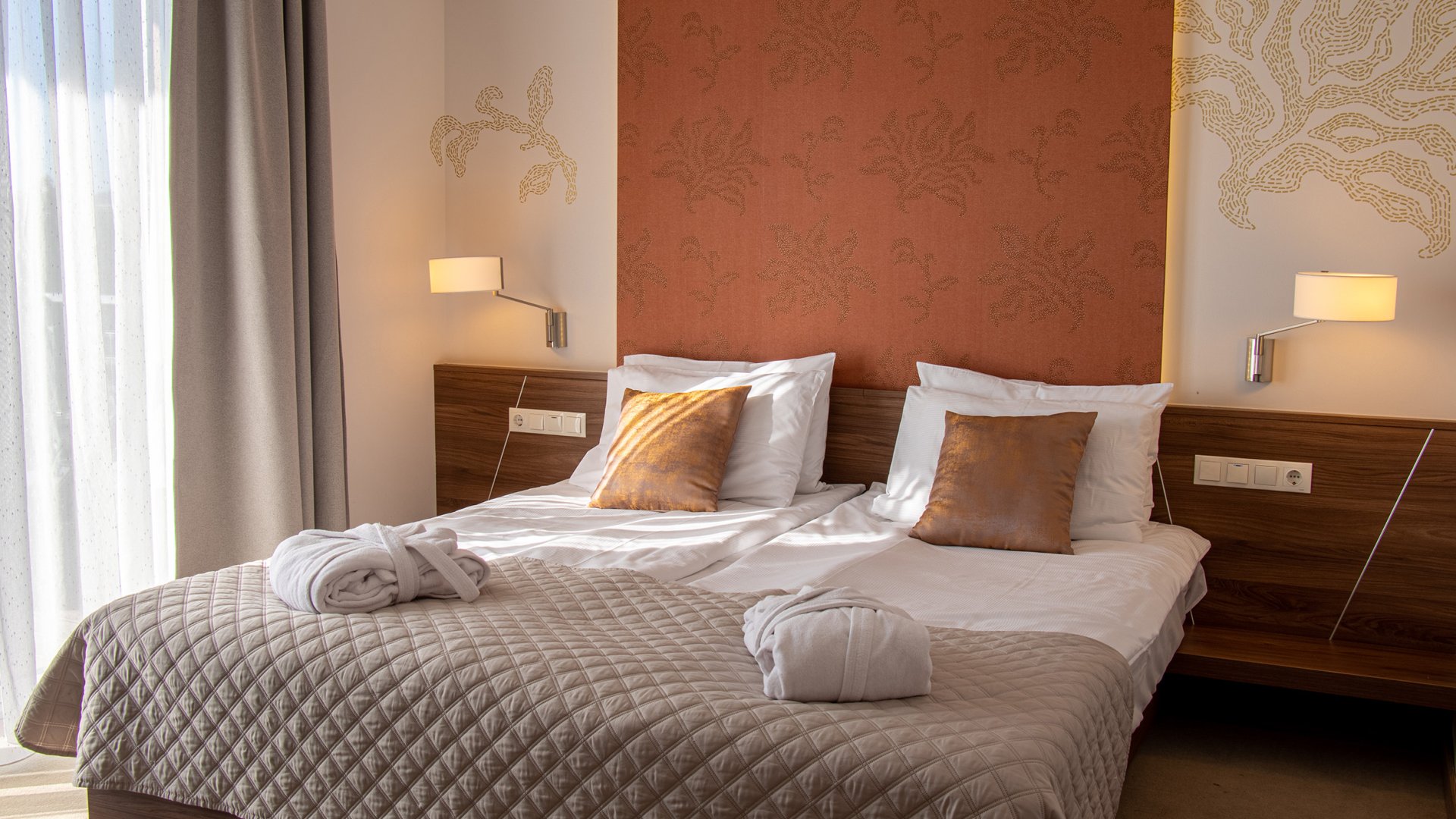
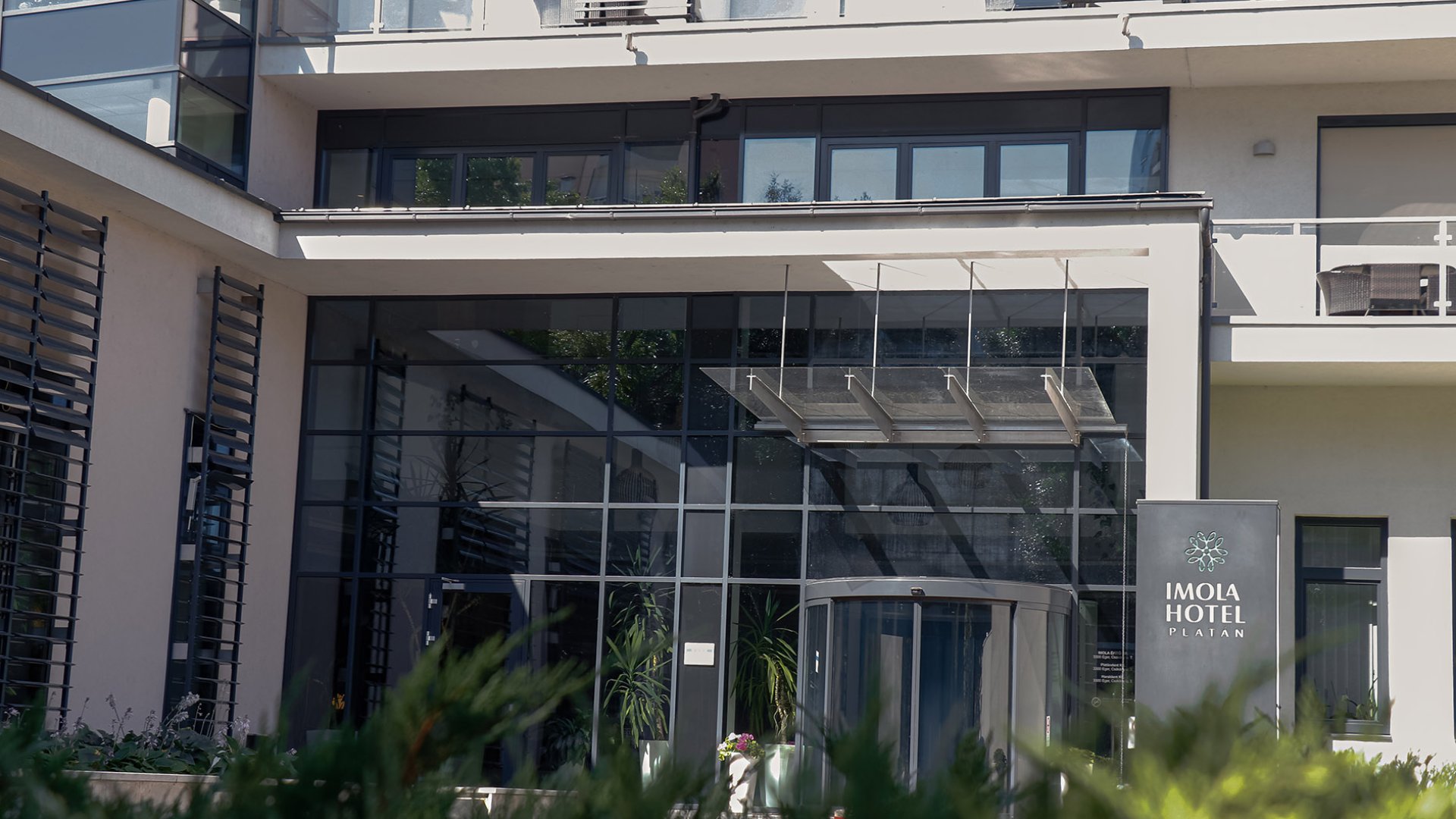
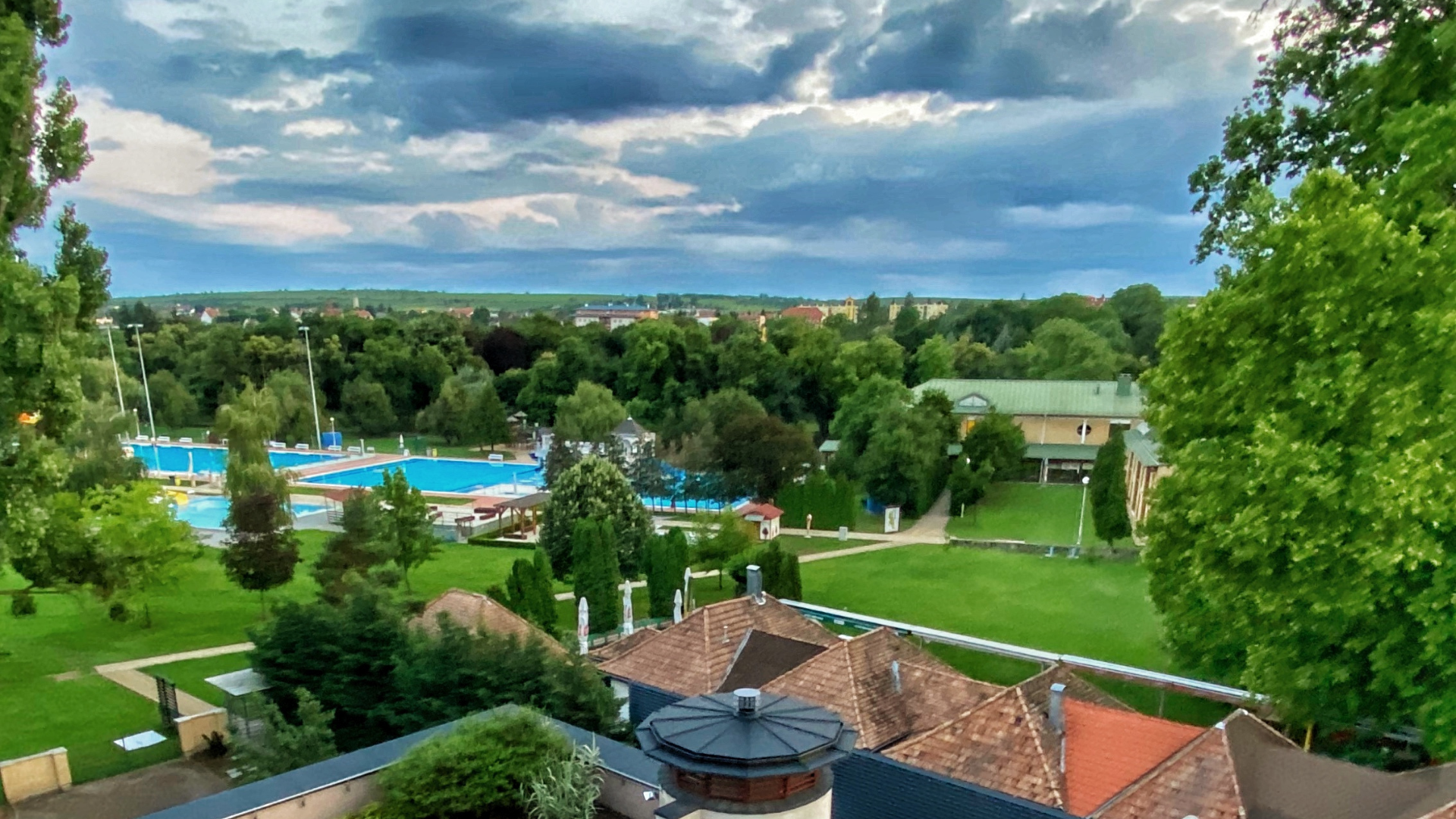
Imola Hotel Platán can be a good starting point for those looking for a peaceful, adults-friendly stay in Eger. According to the hotel’s official website, it is Hungary’s first adults-friendly hotel, welcoming guests in a four-star setting in the heart of Eger, right next to the Thermal Bath.
This setting is especially well suited to an Eger weekend where wine is not a loud programme, but part of the rest. An afternoon walk, dinner, a glass of Egri Csillag or Bikavér, then a slow breakfast and recharging the next day. Not everything needs to be a major event. Sometimes the best Eger experience is when everything falls comfortably into place.
What should you take with you from this if you are heading to Eger?
That Eger wine is not one single flavour and not one single legend. It is not only Bikavér, not only Csillag, and not only cellar visits. It is more of a regional way of thinking, in which the place, the cooler climate, blending, balance and the natural atmosphere of the city all matter.
If you arrive as a weekend traveller, you do not need to know everything. It is enough to taste with an open mind. Start with Egri Csillag if you want something fresher. Choose Bikavér if a richer dinner or slower evening is coming. Ask questions freely, pay attention to what feels good, and allow wine to be not only an accompaniment to the trip, but one of the reasons why Eger will be pleasant to remember later.
Because in the end, Eger wine is not interesting because you need to know everything about it. It is interesting because the more you understand, the more layers it reveals. First it is simply delicious. Then it becomes local. And then, at some point, you realise that a whole city’s rhythm is there in the glass: the cool cellars, the sunny vineyards, the slow dinners, the conversations and that kind of calm that makes Eger not a one-time destination, but a recurring thought.
Frequently Asked Questions
What makes a wine truly Eger wine?
A wine is considered an Eger wine when it is produced in the Eger wine region, within defined geographical and regulatory frameworks. Its character is shaped by the region’s location, climate, soils, grape varieties and long-standing tradition of blending.
Is Egri Bikavér always a heavy red wine?
No. Egri Bikavér can be made in several styles, from fruitier, easier-drinking wines to more serious, age-worthy versions. What they have in common is that they are all red wine blends.
Is Egri Csillag only a light white wine?
Not necessarily. Egri Csillag can be fresh and easy-drinking, but it can also be made in a fuller, more structured style. That is why it is worth tasting several versions rather than judging it based on a single bottle.
Do you need to know a lot about wine to enjoy a weekend in Eger?
No. It is enough to taste with an open mind, pay attention to what you enjoy, and feel free to ask questions. A wine experience is not an exam, but a discovery.